Best Apps for Cheap Flights in 2026: 9 Apps Compared

How we put this together: we compare official feature and pricing pages, app store listings, privacy policies and public user reviews. Prices change, so check the provider's site before you pay.
Key takeaways
- Search apps and deal alert apps do different jobs, and most travellers benefit from using one of each.
- Flexible date and destination search often finds larger savings than a single fixed-date search.
- Price predictions are forecasts, not promises, so use them as timing guidance rather than a guarantee.
- Booking direct with an airline usually makes changes and disruptions easier to handle than booking through a third party.
Quick comparison
| Name | Who it suits | Starting price | Free option | |
|---|---|---|---|---|
 Skyscanner | flexible dates and budget airlines | Free | Yes | Visit |
 Google Flights | price tracking and fare research | Free | Yes | Visit |
 Kayak | filters, forecasts, and trip management | Free | Yes | Visit |
 Hopper | price predictions and fare freezes | Free | Yes | Visit |
 Momondo | lowest fares from smaller sellers | Free | Yes | Visit |
 Kiwi.com | creative multi-airline routes | Free | Yes | Visit |
 Going | curated flight deal alerts | Free | Yes | Visit |
 Expedia | flight plus hotel bundles | Free | Yes | Visit |
 CheapOair | discount fares and phone booking | Free | Yes | Visit |
The best apps for cheap flights
We compared apps that help travellers find lower fares, track price changes, and spot deals. This guide covers search apps, prediction apps, and deal alert services, and it notes where booking direct with an airline is still the safer final step.
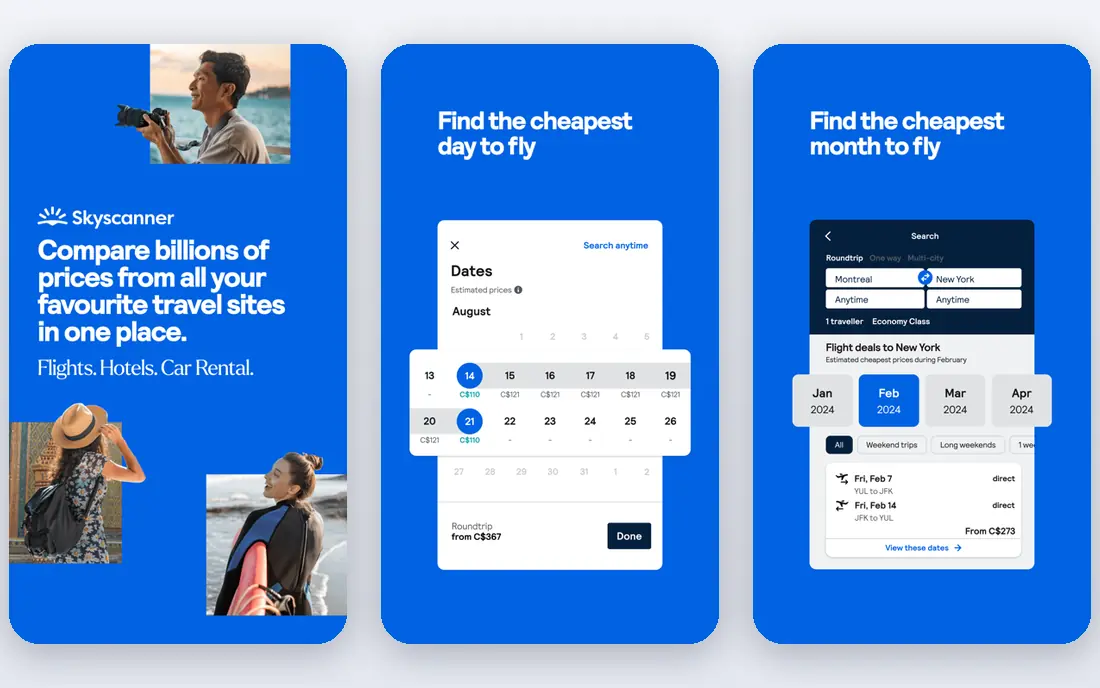
For teams, Skyscanner offers a clear starting point. Skyscanner provides flight search with flexible dates, everywhere search, and price alerts. It is designed for teams who need flexible dates and budget airlines, and it can be arranged around your existing routines rather than forcing one fixed process. What stands out is wide coverage including budget carriers. That strength is most useful when you are flexible on dates or destination. It also helps keep records in one place, so follow-up work is easier to trace than it would be in separate files and messages. The honest catch is booking terms vary by seller. Before you commit, check app availability, alert options, and booking partners on the vendor site and confirm it covers your main use case. A short trial or demo, where one is offered, is the simplest way to test that fit before you move a full workflow across.
- Broad airline coverage
- Everywhere search
- Flexible date calendars
- Booking may go through third parties
- Final terms need checking
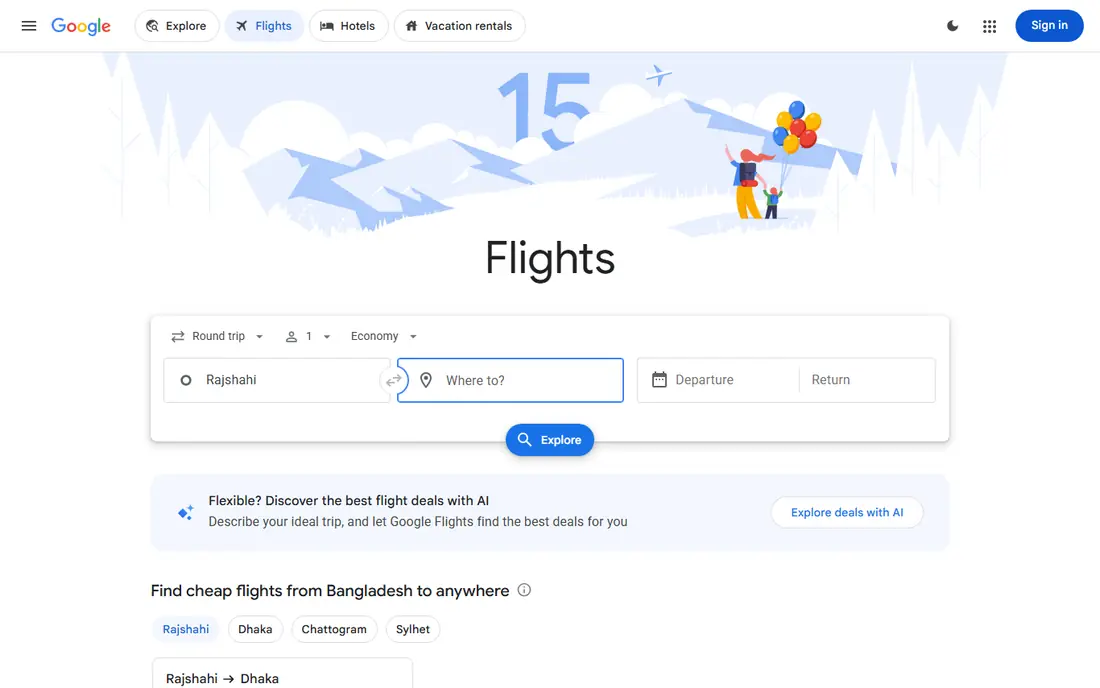
If price tracking and fare research matters most, Google Flights deserves a close look. Google Flights provides flight search with price tracking, calendars, and explore tools. It is designed for buyers who need price tracking and fare research, and it can be arranged around your existing routines rather than forcing one fixed process. What stands out is researching fares before you book. That strength is most useful when you want clear price history. It also helps keep records in one place, so follow-up work is easier to trace than it would be in separate files and messages. The honest catch is mobile experience is web based. Before you commit, check tracking options, coverage, and booking routes on the vendor site and confirm it covers your main use case. A short trial or demo, where one is offered, is the simplest way to test that fit before you move a full workflow across.
- Price calendar and history
- Tracking alerts
- Explore map
- No dedicated native app in some regions
- Booking goes to airline or partners
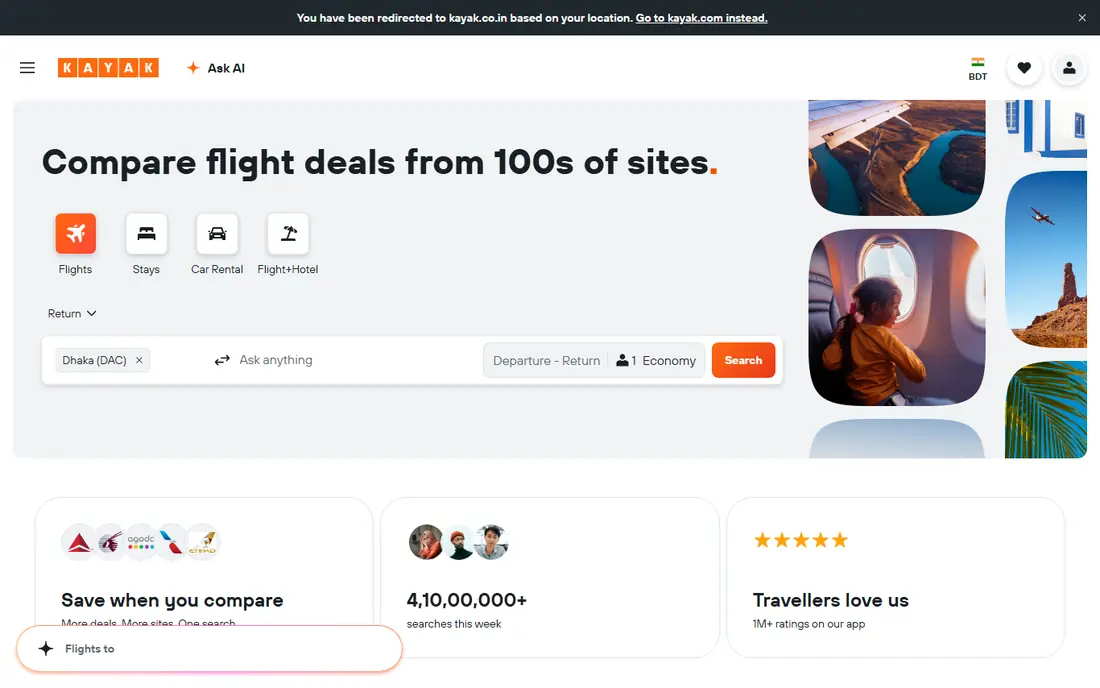
Kayak suits teams who want a defined way to handle filters, forecasts, and trip management. Kayak provides flight search with filters, forecasts, and trip management. It is designed for teams who need filters, forecasts, and trip management, and it can be arranged around your existing routines rather than forcing one fixed process. What stands out is complex itineraries with detailed filters. That strength is most useful when you need strong filtering. It also helps keep records in one place, so follow-up work is easier to trace than it would be in separate files and messages. The honest catch is separate-ticket fares need careful reading. Before you commit, check forecast coverage, alert options, and booking terms on the vendor site and confirm it covers your main use case. A short trial or demo, where one is offered, is the simplest way to test that fit before you move a full workflow across.
- Deep filters
- Price forecast
- Hacker fares
- Trip tracking
- Hacker fares use separate tickets with extra risk
- Booking terms vary
Teams that need price predictions and fare freezes often shortlist Hopper early. Hopper provides price prediction, alerts, and fare freeze options. It is designed for buyers who need price predictions and fare freezes, and it can be arranged around your existing routines rather than forcing one fixed process. What stands out is timing a purchase with guidance. That strength is most useful when you can wait for a better fare. It also helps keep records in one place, so follow-up work is easier to trace than it would be in separate files and messages. The honest catch is prediction accuracy cannot be promised. Before you commit, check freeze terms, fees, and booking support on the vendor site and confirm it covers your main use case. A short trial or demo, where one is offered, is the simplest way to test that fit before you move a full workflow across.
- Price predictions
- Alerts
- Fare freeze options on some bookings
- Predictions are forecasts, not guarantees
- Booking through Hopper adds a middleman
When lowest fares from smaller sellers is the main job, Momondo keeps the focus narrow. Momondo provides flight search across many airlines and smaller booking sites. It is designed for teams who need lowest fares from smaller sellers, and it can be arranged around your existing routines rather than forcing one fixed process. What stands out is finding fares larger sites miss. That strength is most useful when international routes matter most. It also helps keep records in one place, so follow-up work is easier to trace than it would be in separate files and messages. The honest catch is seller terms need checking. Before you commit, check seller list, alert options, and booking terms on the vendor site and confirm it covers your main use case. A short trial or demo, where one is offered, is the simplest way to test that fit before you move a full workflow across.
- Searches many booking sites
- Price graphs
- Flexible search
- Lowest fares may come from smaller sellers with stricter terms
A practical pick for buyers, Kiwi.com covers the basics well. Kiwi.com provides flight search that combines carriers into creative routes. It is designed for buyers who need creative multi-airline routes, and it can be arranged around your existing routines rather than forcing one fixed process. What stands out is unusual routes and multi-airline trips. That strength is most useful when you are open to self-transfers. It also helps keep records in one place, so follow-up work is easier to trace than it would be in separate files and messages. The honest catch is connection risk needs careful reading. Before you commit, check route guarantees, fees, and support terms on the vendor site and confirm it covers your main use case. A short trial or demo, where one is offered, is the simplest way to test that fit before you move a full workflow across.
- Combines carriers that do not partner
- Self-transfer routes
- Alerts
- Self-transfer routes carry missed-connection risk
- Support terms vary
Going is a good match for teams with a defined workflow. Going provides curated flight deal alerts for domestic and international fares. It is designed for teams who need curated flight deal alerts, and it can be arranged around your existing routines rather than forcing one fixed process. What stands out is deal alerts without daily searching. That strength is most useful when you can travel flexibly. It also helps keep records in one place, so follow-up work is easier to trace than it would be in separate files and messages. The honest catch is deals may not match fixed dates. Before you commit, check free tier limits, paid pricing, and departure coverage on the vendor site and confirm it covers your main use case. A short trial or demo, where one is offered, is the simplest way to test that fit before you move a full workflow across.
- Curated deal alerts
- Premium cabin alerts on paid tiers
- Destination ideas
- Deals need flexible dates and quick action
- Paid tiers cost extra
For buyers who value clarity and control, Expedia is worth comparing. Expedia provides flight and hotel booking with bundles and rewards. It is designed for buyers who need flight plus hotel bundles, and it can be arranged around your existing routines rather than forcing one fixed process. What stands out is bundling a trip in one booking. That strength is most useful when you book flight plus hotel together. It also helps keep records in one place, so follow-up work is easier to trace than it would be in separate files and messages. The honest catch is bundle savings vary by trip. Before you commit, check bundle terms, fees, and cancellation rules on the vendor site and confirm it covers your main use case. A short trial or demo, where one is offered, is the simplest way to test that fit before you move a full workflow across.
- Bundled flight and hotel booking
- Rewards
- Trip management
- Standalone flight fares may not always be lowest
- Bundle terms need checking
If you are moving from spreadsheets or manual work, CheapOair gives teams a structured step up. CheapOair provides discount flight search with multi-city and phone booking support. It is designed for teams who need discount fares and phone booking, and it can be arranged around your existing routines rather than forcing one fixed process. What stands out is discount fares with phone help. That strength is most useful when you want phone support for booking. It also helps keep records in one place, so follow-up work is easier to trace than it would be in separate files and messages. The honest catch is fees and terms need a close check. Before you commit, check fees, change terms, and support options on the vendor site and confirm it covers your main use case. A short trial or demo, where one is offered, is the simplest way to test that fit before you move a full workflow across.
- Discount fare search
- Phone support
- Multi-city options
- Fees and change terms need checking
- Fares vary by seller
How we picked these
We compared official feature pages, pricing pages, app store listings, privacy policies, and public reviews for each option. We focused on features that affect daily use, including setup, core workflows, limits, and support, rather than marketing claims alone. We did not claim hands-on testing, and we used vendor pages as the source for prices and plan details. Where a vendor did not publish a clear price, we wrote See website rather than guessing a figure. Readers should confirm current terms on the vendor site before they buy, because plans change.
How to use flight apps without overpaying
Start with a search app for your route, then add alerts for price drops. Compare at least two sources before you book, because each app covers different airlines and booking sites. When you find a fare you like, check the airline site for the same fare before you pay.
Search flexible dates first
Use flexible date calendars and month views to see cheaper days around your trip. A shift of a day or two can change the fare more than any app feature. Check nearby airports too, when travel time allows.
Set alerts, then wait with a limit
Set price alerts for your route and decide a price at which you will book. Alerts help you act when a fare drops, without checking every day. Do not chase a forecast below your limit if your dates are fixed.
Check the final booking terms
Check baggage, change, and cancellation terms before you pay, especially for third-party bookings. Self-transfer routes and separate tickets carry extra risk if a flight is delayed. When terms matter, booking direct is often worth a small price difference.
Frequently asked questions
What is the best app for cheap flights?
The best app for cheap flights depends on how you travel. Google Flights and Skyscanner suit broad searches, Hopper suits timing guidance, and Going suits curated deal alerts. The best cheap flights app for most people is a search app plus an alert service.
What are the best apps for cheap flights for flexible travellers?
Skyscanner and Google Flights are strong for flexible dates and destination ideas. Skyscanner offers an everywhere search, while Google Flights offers a price calendar and explore map. Use both when your dates and destination are flexible.
Are flight price predictions accurate?
Predictions use past fare patterns and current prices, but they cannot account for every schedule change or fuel move. Treat a buy or wait suggestion as guidance, not a promise. A fare you are happy with is often better than waiting for a forecast low.
Should I book through an app or direct with the airline?
Booking direct usually makes changes, refunds, and disruption help easier. Third-party bookings can be cheaper, but the seller, not the airline, may handle changes. Compare the final price and terms, then choose direct when terms matter.
Do deal alert services save money?
They can, especially for travellers with flexible dates who can act quickly on a deal. Free tiers cover basic alerts, while paid tiers add premium cabin and mistake fare alerts. A deal service works best when you can travel on short notice.
Sources we checked (9)

Online Jobs is an independent blog about careers, online work, learning new skills and the tools that help people earn. More about us.
Keep reading
All posts
Best eSIM App
Compare the best eSIM app for travel in 2026, from Airalo and Holafly to Saily and Nomad, with data plans, coverage, hotspot rules, and install tips for trips.

Best Trip Planning App
Compare the best trip planning app options for itineraries, road trips, group travel, and flights, with free plans, pricing, and honest trade-offs compared.

Best Travel Companies
Compare the best travel companies for small-group tours, escorted holidays and learning trips, with honest notes on group size, pace, price and inclusions.